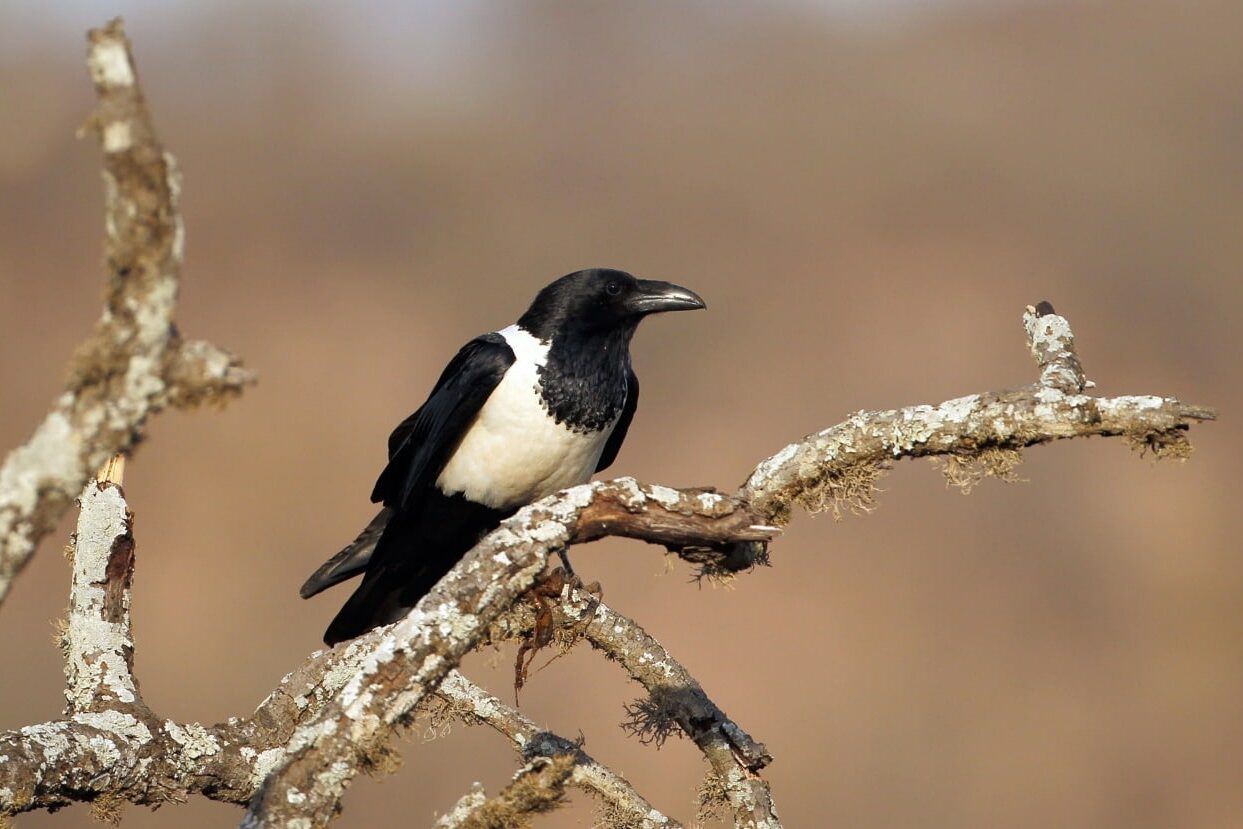
It was over the weekend around the braai that my mother-in-law mentioned she had counted four Pied crows flying by her window, it struck me that I have actually become used to seeing such a large number of crows in our area without giving it a second thought. There has been a definite increase in the numbers of Pied crows over the last 10 years in Southern Africa.
Before Covid struck and all was still honkydory in the world, I was guiding a wildlife tour in the Kruger National park, and as you do in Kruger ,you see a lot of Impala .Although guests rarely ask why there are so many impala , it did set off a train of thought for me that got resurrected with the four counted crows over the weekend.
When I first heard the terminology “ successful animals “I felt it related to something like a strong lion being able to find food at will, survive, look after its pride and maintain its territory. But as I read more, I realized it meant something completely different. Successful animals not only survive in a changing environment and world but they can grow their numbers, adapting to find different food sources and counter different dangers, whether it be human or animals or even pollution.
Impala has a very special evolutionary significance as it has been surviving virtually unchanged for the past 5 million years, which suggests it is a superbly adaptable species. One of the Impalas strategies is that they are mixed feeders and can feed on whatever food source is best seasonally. This gives them a huge advantage over other antelopes that either just grazes on grass or just browses leaves. In the summers usually, a higher percentage of green grass is eaten as it is more protein-rich with less secondary compounds to digest, and in winter months a higher percentage of browsing is done.
And that’s how I got back to the African Pied crows and how its numbers have been growing exponential because it’s such an extremely successful animal. Crows are members of the genus Corvus and can be found on every continent except Antarctica and South America, to date there are 40 species named.
Throughout history, people have marveled at the intelligence of these birds. Crows have adapted to life in a human-dominated world. It benefits extensively from human based activities. It scavenges around urban centers, rural villages and national roads. Originally only a tree – nester, it has expanded its range by nesting on telephone poles, buildings, electricity pylons and wind pumps.
While a crow’s brain may seem small in comparison to a human brain, what matters is the size of the brain in relation to the size of the animal. Relative to its body, a crow’s brain and a primate brain are comparable. According to Professor John Marzluff at the University of Washington’s Aviation Conservation Lab, a crow is essentially a flying monkey.
In Japan, crows use cars like over sized nutcrackers. The birds have learned to take walnuts over to road intersections, where they put the hard-shelled snacks down onto the pavement. The crow then waits for a passing vehicle to smash the nut, after which it will swoop down and eat the delicious interior.
Crows have exceptional memories, around half a million crows would stop in a town in Ontario, Canada on their migration route, posing a threat to the farming community’s crops. The mayor of the town declared war on crows and the hunt began. Since then, the crows have bypassed the town, flying high enough to avoid being shot. This had not, however, stopped them from leaving droppings all over the municipality.
Lots of non-human animals, including chimpanzees and orangutans, create useful implements which help them survive in the wild. Crows are the only non-primates that make new tools. In addition to using sticks as spears and hooks, crows will bend wire to make tools, even if they have never encountered wire before.
Crows tend to be opportunistic and creative, commonly exploiting new food sources or adopting new feeding strategies to make their lives easier. The American crow is known to catch its own fish, for example, in some cases even using bread or other food as bait to lure fish closer.
Planning for the future isn’t only a human trait. Crows have been known to memorize restaurant schedules and garbage days, to take advantage of prime scavenging times.
Apart from the famous caw, caw noise, crows emit several other sounds. Each one sends out a different message; This avian language isn’t homogeneous; two different populations of crows may have slight differences. As ornithologist John M. Marzluff and author Tony Angell noted “If a crow changes its social group, the bird will try to fit in by talking like the popular guys. “When crows join a new flock”they learn the flock’s dialect by mimicking the calls of dominant flock members.”
Crows do sometimes raid farms and gardens, but any damage they cause may be offset by ecological benefits like seed dispersal and eating pest insects. While any species has an inherent right to exist, we’re especially lucky to have crows living among us. They can remind us how much we still have in common with the wildlife all around us.
Join me on my Cape Town birding tour to see some African pied crows up close.