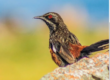

First and most important, there isn’t just one correct way to identify birds, we all have our own way. When identifying birds there is generally a combination of characteristics that needs to be taken into consideration when separating one species from another. Things like size, shape and proportions, plumage coloration and pattern, behavior, and habitat all factor in.
The identification method we are looking at is often called JIZZ. This refers to the General Impression of Size and Shape, GISS but ‘JIZZ ‘is simply easier on the tongue, the acronym GISS was first used in WWII to identify military aircraft and has now got a second life within the birding fraternity.
We can eliminate a lot of possibilities by utilizing JIZZ but there are times when it’s not all that effective, such as telling birds apart of the same species or trying to identify a shorebird in a mixed flock. Identifying birds takes time in the field, experience and a little guidance. What you need to do is start off by learning the most common birds so you can consider them background or the basis of your knowledge. As you look for less common or rare species these common birds become your reference point in conjunction with the JIZZ method.
Trevor Carnaby, the well-known author of a range of bird field guides and books uses a 7-point formula when identifying birds. The 7 points need to be followed in sequence from point 1 to 7, they are simple questions that you need to ask yourself while watching the bird.
What is the general size of the bird?
According to Trevor this is the most important question. You need to start off with by creating three bird size categories; small, medium and large. For each size you must choose a common bird as reference size, for example: small- sparrow, medium- pigeon, large- egret. You then take your spotted bird and make a calculated decision into which category the bird fits: small, medium or large, and that’s where your size comes from.
What is the general shape of the bird?
Many of the bird’s physical attributes contribute to the shape of the bird. Only time in the field will assist you in identifying the general shape of birds. Things like long tails, postures when resting, flying or feeding, crests and shapes of wings all contribute and could assist in making the species shape and identification clearer.
What is the plumage color and pattern?
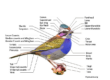
Plumage covers almost the whole bird, it is important to know which colors are where on a bird, for example the head is black, the wings are brown, and the chest is white. It is also important to note different plumage patterns and their locations, such as spots, blotches and stripes on the body. Plumages for birds also differ according to life– stages such as Adult, Immature, Juvenile, Eclipse, Breeding and Non-breeding. It is sometimes difficult to use plumage color as a reference point due to bad light and wet conditions.
What is the bill color?
When looking at the bill its important to look at each mandible separately to ensure the exact color of them, top black and lower red for example, the cere also plays a role in beak identification. Its also good to note the shape of the bill or beak
What is the leg color?
Legs of birds are generally conspicuous and can assist in identification. Bird’s legs are separated into the upper part, the tibia and the lower part, the tarsus. The knee is called the tibio-tarsal joint or ankle. Feathering on legs are also an indicative factor, does the toes have claws or are they webbed? These factors will also link to habitat and diet.
What habitat is it in?
Birds use specific habitats for feeding, breeding and socializing, not all birders know the different habitats but in Southern Africa one can use the different biomes as a reference point and within these biomes we can look at the vegetation structures to distinguish one habitat from another. Some of these biomes and habitats are as follows: Grasslands, Arid and desert areas, fynbos, thicket, forests, open plains, rocky areas, alpine or afro montane, marshes, wetlands, coastal shores etc. The habitat of most species can be found in the description of the species in bird field guides, this can be of assistance in identifying the resident bird species when embarking on a birding trip to that habitat.
What was the bird doing, its habits?
When dealing with a group of bids or when visibility is not good, a bird’s individual habits may help in making a positive identification. These include the following:
Feeding: Is the bird diving into the sea, probing into a tree, scything the water
Locomotion: How was it moving, flying, walking, gliding or soaring
Maintenance activities: how was it preening
Displays: was it using a special song or flight, open wing display, broken wing, dive bombing
Breeding: type of nest, male or female participation
Sociability: lone bird, small group, large flock, intermingling species in a flock, pairs
Using the JIZZ method could make your birding experience a lot more productive but the only place to use this method is in the field, not at a desk behind a book in the house or office, so get out there and get birding!
If you are interested in seeing JIZZ in action , join my Cape Town birding tour.