A couple of friends had contacted me prior to the Covid pandemic, to guide them on a birding safari in the Northeast of Namibia and in Botswana .We had booked everything, when the pandemic struck , and so year after year things were postponed until the pandemic ended and we finally managed to get on the road in April of this year, 2023.
Formerly known as the Caprivi Strip, the Zambezi Region is a paradise in the north east corner of Namibia. The Zambezi Region has two of the five perennial rivers in Namibia, the Zambezi and the Kwando, which have their catchments in Zambia and Angola. In years of heavy rainfall, these rivers flood over an extensive area.
In fact, up to a third of the Zambezi Region is turned into a floodplain. The Namibia Wetland birders route, as it has recently been named, is a birders paradise. The plan was to visit three national parks in Namibia; namely Bwabwata National Park, Muhangu national park and Nkasa Rupara national park and pop over into Botswana to visit Chobe National park.
Chobe is probably one of my favorite parks in Southern Africa, the park fronts onto the mighty Zambezi river and is easily accessible with 4×4 vehicle for day trips from the town of Kasane, where we were based. The River drive, as it is known, takes you through the park along the Zambezi river’s banks from Kasane, almost all the way to the border post with Namibia at Ngoma. Its a must, if you ever get up that way.We had started early on the first morning and once all the lodge game drive vehicles had left the park, we almost had the whole park to ourselves by 10 am. Just us, the birds and unspoilt nature.
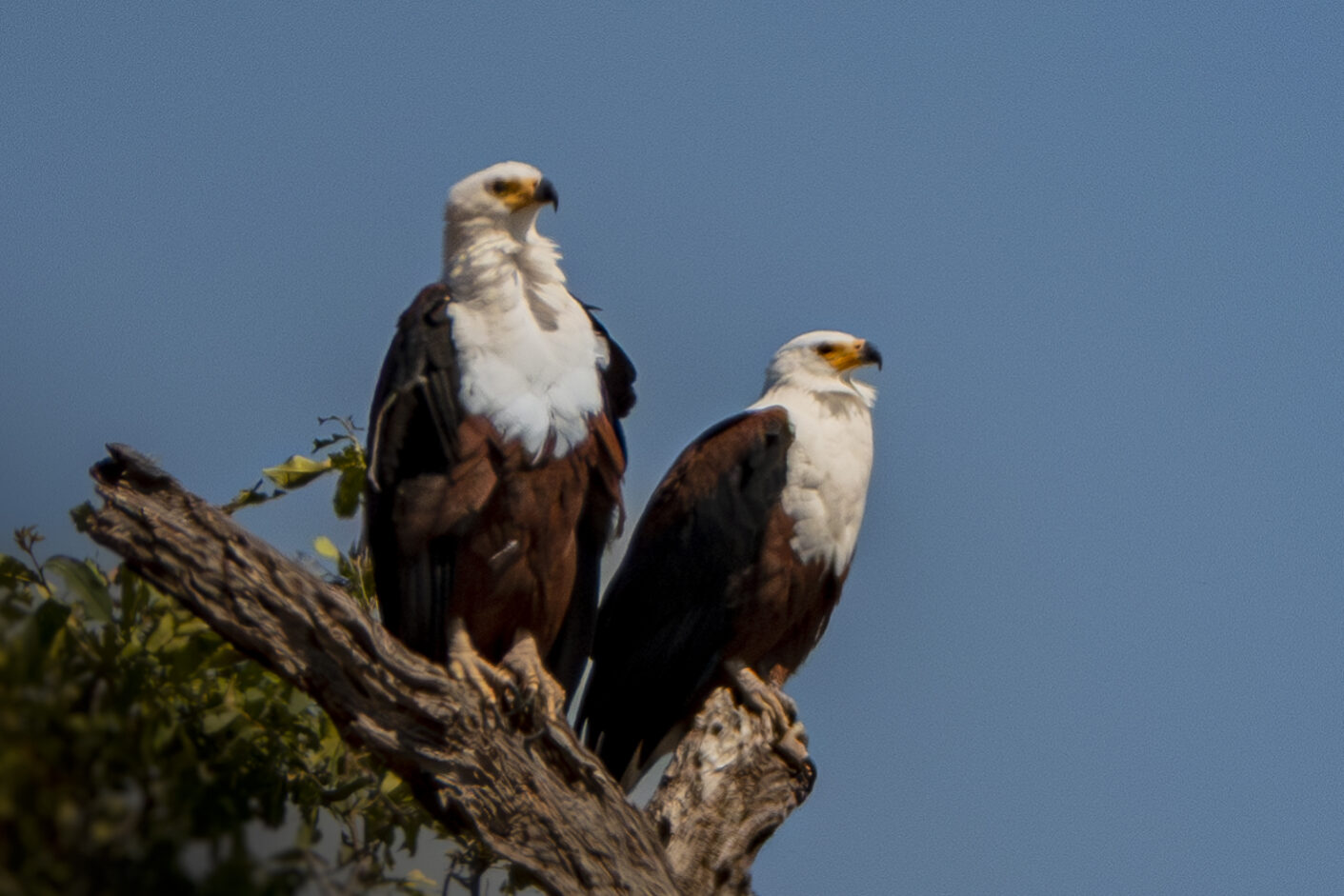
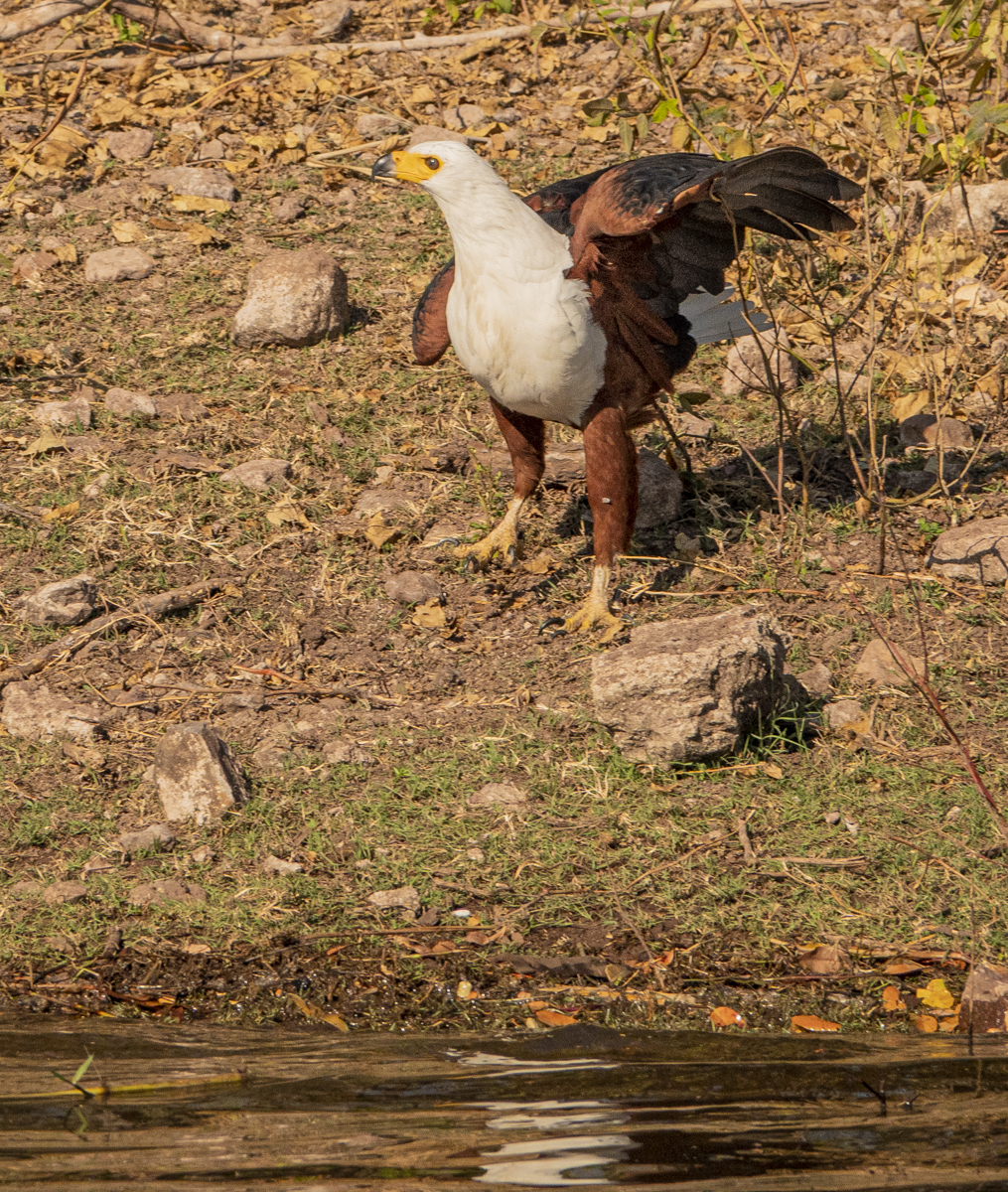
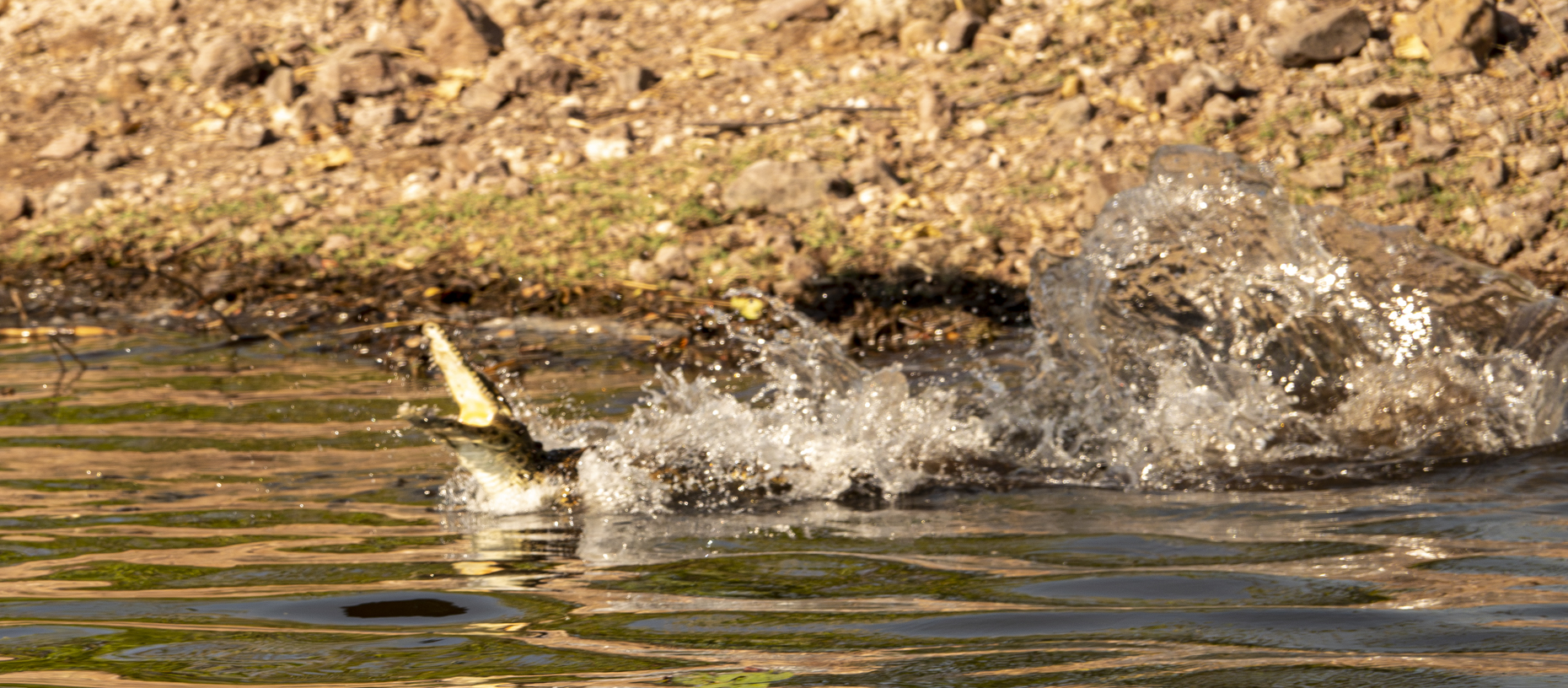
We had stopped for a coffee break and were enjoying the lovely views across the mighty Zambezi river, where a local fisherman was trying his luck in his mokoro. When we spotted an African Fish eagle on the riverbank, not 10 meters from us. Luckily Leon had his camera ready and captured this amazing scene below,.Suddenly the Fish eagle dove into the river, grabbed what looked like a stick at first and flew off.But once we had a look at the photos we realized that the Fish eagle had stolen a crocodiles’ lunch, a guinea fowl, from his grasp and flew off with it in one swoop, nature at its best. Good work Leon!


These beautiful raptors soar proudly across Africa’s blue skies and their image sums up the African wilderness, but there is more to these wonderful creatures than meets the eye. The African fish eagle is just one of seven. The Madagascan fish eagle is the only other species native to Africa. Steller’s sea eagle is a rare bird found in north-eastern Asia while Sanford’s fish eagle is endemic to the Solomon Islands. Three fish eagle species live on the Indian subcontinent, mostly around the Himalayan foothills. These are the grey-headed fish eagle, the lesser fish eagle, and the Pallas’s fish eagle.
African fish eagles are kleptoparasites, as we HAD just witnessed on our safari, which is to say they steal prey from other species. Common victims of this piratical behavior include goliath herons and saddle-billed stork and in our case a young crocodile!
African fish eagles aren’t just scavengers. Nor do they feed just on fish. Fish is supplemented by other birds and mammals. They are incredibly efficient hunters, picking on ducks, waterfowl, and various birds. African fish eagles sometimes eat monkeys and crocodiles, so our crocodile was lucky he had some food to exchange rather than being eaten himself.
There are around 300,000 fish eagles in Africa. This vast population is spread across most of East and Southern Africa. It makes them one of the most numerous predatory birds in Africa.
Like most raptors, African fish eagles use their feet to grab prey. A fish eagle’s toes are coated in sharp barbs, which help it to grab fish and other slippery prey. Anything taken from the water is slippery, which is why the eagles need such rough and long feet. Then they use a hook-shaped beak to open their prey.
Fish eagles have excellent color vision and can spot camouflaged prey from a distance. This is how they spot fish in water. Once a fish is sighted, they swoop down and snatch it with their large, powerful talons
Fish eagles will mate for life, with the actual mating taking place during the dry season when the waters are lowest. Every season they return to their original nests.
Females are larger than males, females grow to have wingspans of 2.4 meters. Males are a little narrower at 2 meters across and the females can weigh as much as 1kg more than males.
The African fish eagles are active and can perform bold flight displays, sometimes diving completely into the water to catch their prey. They can remain on their perch for up to 85-90% of the day. African fish eagles are aggressive birds and will attack each other if they stray into others territory.
According to African folklore when you are fishing in remote waters, the resident Fish Eagles deserves the first catch of the day. By offering them your first catch, you will be rewarded with a successful day’s fishing and the Fish Eagles will respect all your subsequent catches with their crops full.